You're Getting Leads. So Why Aren't They Turning Into Customers?

Getting more leads is usually the goal of marketing. More website inquiries, more phone calls, more quote requests and more people raising their hands to say they're interested.
But generating the lead is only half the job.
We've seen businesses invest in advertising, successfully generate inquiries and then conclude that the marketing isn't working because those inquiries aren't turning into customers.
Sometimes the problem isn't the marketing at all. It's what happens after the lead arrives.
What Happens After Someone Fills Out Your Form?
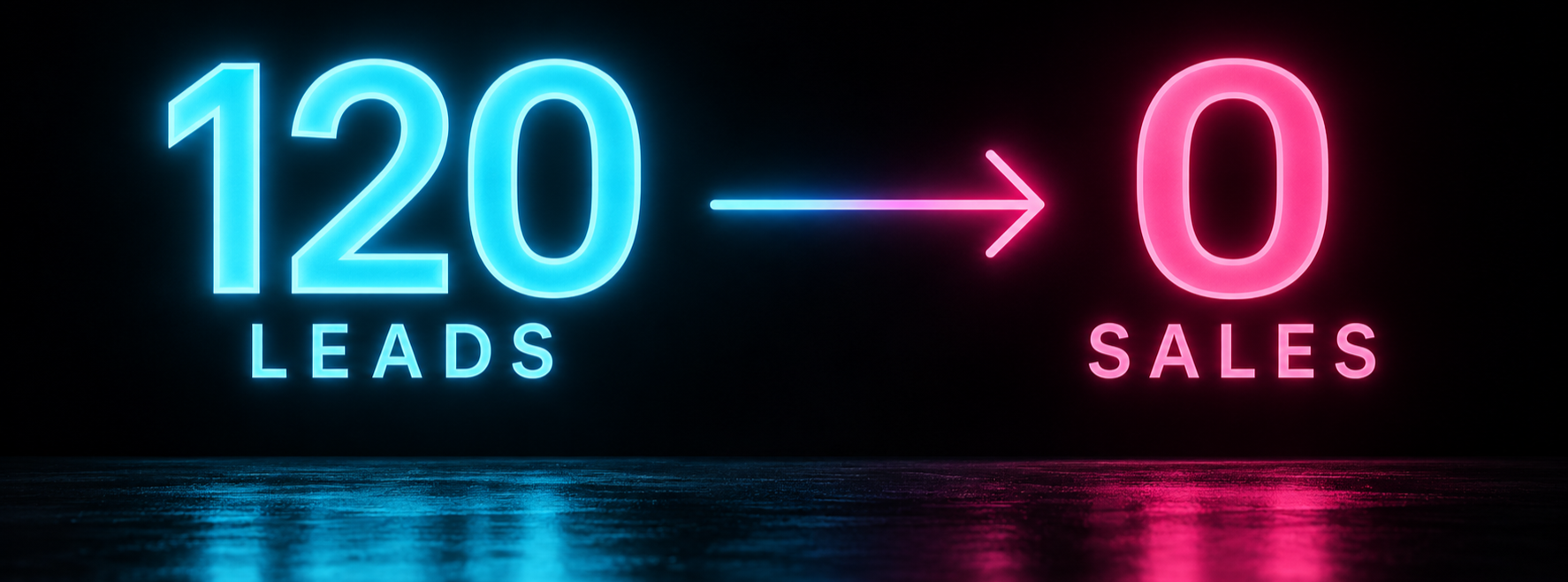
We once generated more than 120 tracked leads through Google Ads Management for a client without a single reported sale.
If you looked only at the final result, it would be easy to conclude that the advertising wasn't working. But people were clicking the ads, visiting the website and completing the form to ask for more information. The marketing had successfully brought interested people to the business.
What we couldn't control was what happened next.
When 120 people raise their hands and not one becomes a customer, the next place to investigate isn't necessarily the ad campaign. It's the sales process waiting on the other side.
How Quickly Are You Responding?
Someone who submits a form or requests a quote is thinking about your service right now. They may also be contacting two or three other businesses at the same time.
If their inquiry sits in an inbox for three days before someone responds, there's a good chance another company has already called, answered their questions and booked the job.
That doesn't mean someone on your team needs to drop everything every time a form comes through. It does mean your business should have a reasonable response-time standard and someone should be responsible for making sure it happens.
One Phone Call Isn't a Follow-Up Process
You call. They don't answer. You leave a voicemail.
Now what?
People miss calls. They don't recognize the number, they're at work, they're driving or they simply can't talk at that moment. One unanswered phone call doesn't necessarily mean someone who contacted your business is no longer interested.
Decide what a follow-up process looks like before the leads start arriving. Maybe that's another call the following day, an email or text when appropriate and another attempt a few days later. The exact process will depend on your business, but there should be a process.
Otherwise perfectly good opportunities disappear because nobody remembered to try again.
Do You Know Where Your Leads Are Going?
You don't necessarily need complicated sales software, but you do need some way to know what happened.
Was the person contacted? Were they qualified? Did they receive a quote? Did they book? Did you lose them to a competitor? Were they never a good fit in the first place?
Without that information, you can't tell where the problem is.
If 100 leads come in and only two are remotely relevant, there's probably something wrong with the marketing or targeting. If 100 qualified leads come in and nobody follows up with them, spending more money on advertising isn't going to fix anything.
Marketing Can't Close the Sale for You
Good marketing gets the right people interested enough to take the next step. Your website, ads, SEO and other marketing can create that opportunity, but eventually a real person on your team has to take over.
Before increasing your advertising budget because you need more leads, take a look at what happens to the leads you're already getting.
Who receives them? How quickly are they contacted? How many times do you follow up? Are you tracking what happens? And most importantly, does everyone involved know exactly what they're supposed to do when a new inquiry comes in?
Getting more leads won't fix a broken sales process. It will just give the broken process more leads to lose.